What a year! Goes from too wet to too dry. With young crops and little canopy yet, a few pests could become a problem quickly. Especially if hot dry conditions continue to stress the crop further. Scout fields frequently for these three pests; Potato leafhoppers, thrips and spider mites.
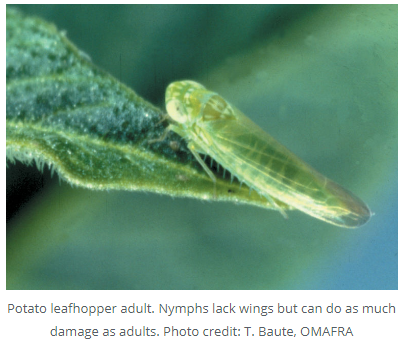
Potato leafhoppers (PLH) are in high numbers in many counties. Both dry beans and forages are at risk. Scouting information and thresholds are available here: https://fieldcropnews.com/2017/06/leafhopper-alert/
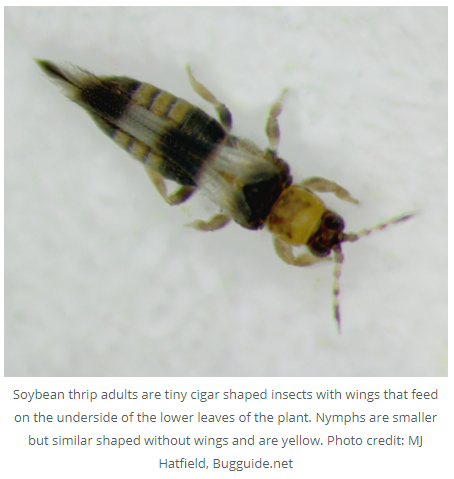
Thrips are starting to show up in some corn and soybean fields. They are usually not a concern unless the crop is young and stressed from hot dry conditions and can’t produce new leaves quickly to compensate. Thrips are tiny cigar shaped insects that feed on individual plant cells on the underside of the leaves which causes a mottling appearance on the upper leaf surface, usually along the leaf veins. Use a handlens to look for thrips on the underside of the leaves. Injury rarely justifies spraying unless the plants are not growing out of the injury. Scout new leaves in 20 areas of the field. If 75% of the plants scouted have injury on the newest leaves and/or there are 8 or more thrips per leaf, spray may be warranted. Rain can help the plants grow out of the injury, so hold off on spraying if rain is forecasted and scout again a few days after the rain to see if the plants are growing out of the injury.
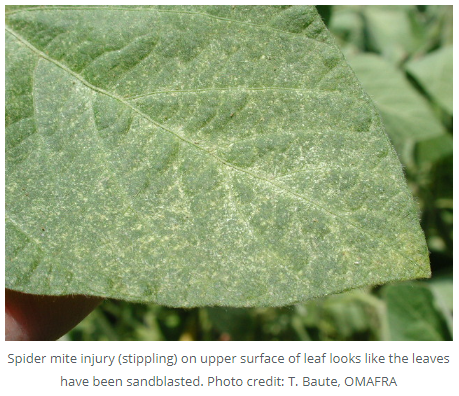
Spider mites are starting to show up on time but crops are a lot younger than usual. Soybeans, dry beans and even corn are at risk. Similar to thrip damage, they too feed on the individual plant cells on the underside of the leaves. Upper leaf surface becomes stippled and eventually dies and falls off the plant. Scout field edges first to look for signs of plants starting to yellow or bronze. Shake injured leaves on a piece of paper to confirm that mites are present.
Action Threshold for beans and soybeans: 4 mites per leaflet or 1 severely infested plant. Rain can help knock populations down so re-scout after a rain event before making a decision about spraying.
Dimethoate (Cygon/Lagon) is the only product registered for spider mites on soybeans and edible beans. DO NOT use Matador, it does not control spider mite and will kill beneficial insects which include ladybird beetle, thrips, and predaceous mites.
Source : Filed Crop News