By Bernt Nelson
Though lower feed costs in 2024 have provided opportunities for profitability, hog producers have a long way to go to make up for their 2023 losses, when farrow-to-finish operations lost $31 per head.
According to USDA’s most recent Quarterly Hogs and Pigs report, the inventory of all U.S. hogs and pigs was 75.8 million hogs, up 1% from the fourth quarter in 2023. This report, issued four times per year, presents information on inventory, class, weight group, farrowings and farrowing intentions for the current U.S. pig crop. The fourth quarter report was released on Dec. 23.
Breeding Herd and Pig Crop
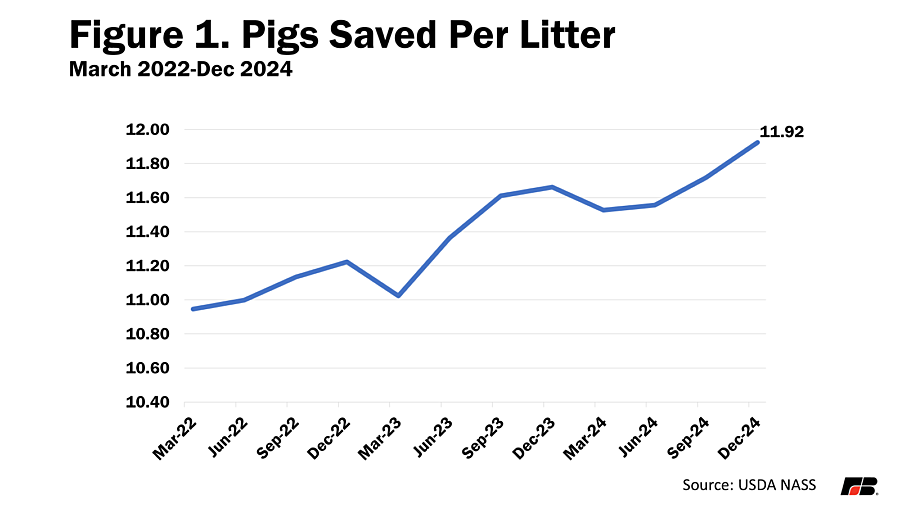
The breeding inventory was 6 million head, also up about 1% from 2023 but slightly down from last quarter. The September-November pig crop was 35.2 million, up nearly 2% from 2023. Sows farrowing between September and November were 2.96 million, down a quarter of a percent from last year and representing 49% of the overall breeding herd. Pigs saved per litter were a record-high 11.92. The rise in pigs saved per litter more than makes up for the 2% decline in farrowings for the fourth quarter. Farrowing intentions for the first quarter of 2025 are 2.95 million, up about 1% from 2024. The slightly higher farrowing intentions, if paired with continued high pigs saved per litter could increase inventory numbers, which would put downward pressure on prices to start out the new year.
Market Hogs
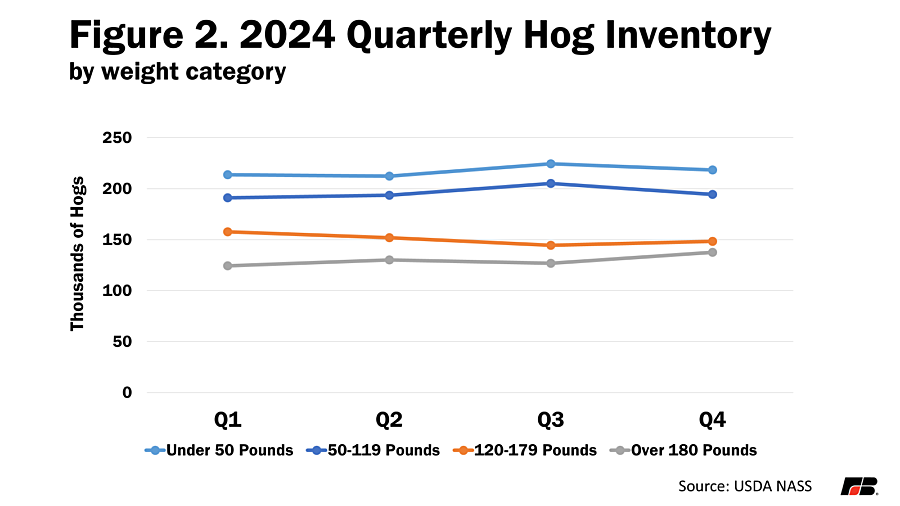
The market hog inventory was 69.8 million, up 1% from last year but down slightly from last quarter. The lighter weight categories, under 50 pounds and 50-119 pounds, were up 1.2% and 1.4%, respectively, to 21.8 million and 19.4 million. The heavier-weight market hogs, 119-179 pounds, were 14.8 million, while the inventory of hogs 180 pounds and above was 13.6 million. Both heavier categories were down about half a percent, which suggests slightly lower hog slaughter for the first quarter of 2025.
Click here to see more...