Farms.com Home   News

REMINDER: Replanting Decisions in Corn and Soybeans… What to Consider

By Osler Ortez and Laura Lindsey et.al

Unfavorable weather during the months of April, May, and early June has negatively affected corn and soybean acres establishment in the state. If considering replanting fields, a C.O.R.N. Newsletter article released in mid-May has several steps and considerations that can help the decision.
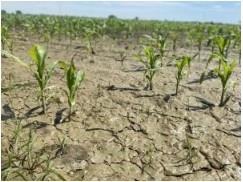
Mud in soybean field

Mud in soybean field

Read the article here: https://agcrops.osu.edu/newsletter/corn-newsletter/2022-14/replanting-decisions-corn-and-soybeans%E2%80%A6-what-consider

If soil crusting/emergence is a concern, it may be more beneficial to consider using a rotary hoe to improve emergence than re-planting. For agronomic crops, we are approaching the period where gains in stands won’t offset yield losses caused by a shortened growing season. Other considerations are to consult with your crop insurance agent and seed company reps on any replanting policies or assessments required prior to implementing this practice.
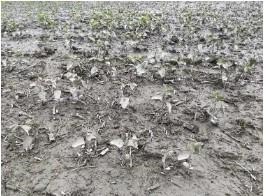
Flooding in soybean field

Flooding in soybean field

Source : osu.edu

Trending Video

What Is Remote Sensing In Precision Agriculture? - The World of Agriculture

Video: What Is Remote Sensing In Precision Agriculture? - The World of Agriculture

What Is Remote Sensing In Precision Agriculture? In this informative video, we will dive into the fascinating world of remote sensing and its role in precision agriculture. Remote sensing technology allows farmers to gather critical information about their fields without the need for physical presence. By utilizing satellites, drones, and aircraft equipped with advanced sensors, farmers can monitor various aspects of their crops, from temperature and moisture levels to overall plant health.

We will explore how the data collected through remote sensing can empower farmers to make strategic decisions for their crops. With the ability to identify specific areas that require more water or nutrients, farmers can optimize resource usage, leading to healthier plants and improved yields.

Moreover, remote sensing plays a vital role in tracking crop growth over time. By comparing images taken at different growth stages, farmers can evaluate their crops’ development and adjust their management practices accordingly.