Farms.com Home   News

Selecting The Right Lubricant For Your Equipment Saves Time, Money And Frustration

By Les Harrison  

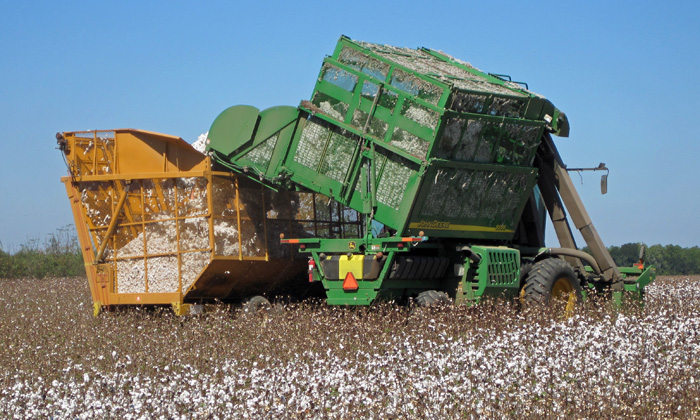
cotton-harvest-equipment

Using the correct engine lubricant with a proper maintenance schedule is essential for long tractor life, and to ensure equipment is running well when you need it most at harvest time.

Farming enterprises in the 21st century require many costly inputs to even have a chance of competing successfully. Equipment such as tractors, truck and harvest machinery are necessary, but a major long term expense.

Thorough and regular maintenance is required to get the best performance and longest life from any internal combustion engine powered rolling stock. Engine oils are a key maintenance component, but the array of choices can be confusing.

Frequently the first consideration is the viscosity, a measure of the oil’s thickness. Higher number ratings indicate thicker, more viscous oils. This ranking is an indication of how well the oil flows and the protection it provides to moving parts.

Modern multi-viscosity oils provide the correct flow characteristics across a broad range of temperatures. The equipment manufactures’ handbook will make recommendations for the correct viscosity ratings to be used.

The W following the first number stands for “winter” (not weight) and indicates the cold-start viscosity at very lower temperatures. The range is achieved by additives called viscosity index improvers which thicken the oil as it heats.

Another consideration is whether to use conventional or synthetic oil. Each has distinct advantages, with the cost advantage going to conventional which is also known as mineral oil.

Synthetics are classified as Group I, II, III IV or V. Groups I, II and III are refined from oil pumped from wells. Group IV and V are chemically manufactured from modified materials.

The higher group rating indicates lower sulfur content and a higher viscosity index, an indication of the oil’s ability to reduce friction. Both are important features for modern engines.

The term “Ester” on the label is reflective of Group V oils which have premium properties. These features include high detergency, important for engine cleanliness, and exceptional lubricating qualities.

As with the viscosity requirements, the equipment manufacturer will recommend the type of oil required and a timetable for changing. Strictly following this maintenance schedule will promote long engine life and minimize costly repairs at critical times.

Source:ufl.edu


Trending Video

Will the 2025 USDA December Crop Report Be a Market Mover/Surprise?

Video: Will the 2025 USDA December Crop Report Be a Market Mover/Surprise?


Historically, the USDA December crop report is a non-event or another dud report as the USDA reserves any final supply changes to the final report in January of the following year in this case 2026. But after the longest U.S. government shutdown in history at 43 days and no October crop report will they provide more data/surprise and make an exception?
Our China U.S. soybean purchase tracker is now at 26.6% or a total of 3.2 mmt but for traders it’s taking too long to unfold.
The final Stats Canada production report was bearish canola and wheat projection a record crop in both (it adds to the global glut of supplies) and bullish local corn and soybean prices in Ontario/Quebec thanks to a drought. It will not help the fund flow short-term, the USDA may need to offset it?
A U.S. Fed interest rate cut of another 25-basis point next Wednesday (probability 87.1%) could help fund flow and sentiment in stock and ag commodities into year end.
More inflows into Bitcoin this past week saw prices rebound back above 90,000 with support at 82,000 and resistance at 96,000.
A V-shaped bottom in cattle suggest the lows are in after Mexico reported another new world screwworm case. Lower weights, seasonal demand and higher U.S. beef select/choice values with a continued closure of the Mexican border to cattle will result in a resumption of higher cattle futures into yearend.
Australia is expected to produce its 3rd largest wheat crop ever at 36 mmt adding to the global glut of supplies.
Reports of ASF in hogs in Spain the largest pork exporter in Europe could see the U.S. win more pork export business long-term.
If the rains verify into next week of 3-5 inches for Brazil it would go a long way to fixing the dry regions from the last 2-months, but the European weather model has been wrong for the past 2-months!
Natural gas futures are surging to the 3rd price count as frigid hold temps set in.
CDN $ is also surging to end the week on a very resilient economy and better employment numbers suggesting no interest rate cuts next week.
Finally, the CFTC report showed funds were net buyers of soybeans but sellers of corn, canola and wheat. In real time the funds have gone back to selling as they take some profits.