Crop demand has been strong and crop movement has been excellent for the 2020-2021 crop year.
‘Weekly updates from the Canadian Grain Commission (CGC) provide useful crop market demand information,’ says Neil Blue, provincial crop market analyst with Alberta Agriculture and Forestry.
The Canadian Grain Commission numbers include only movement of bulk crops through facilities licensed by the CGC, so exclude container movement of crops as well as overland crop movements to the U.S.
‘Numbers from the CGC on Canadian crop movement from August 1, 2020 to mid-May, 2021 compared to the last crop year show an improvement in producer crop deliveries relative to last year. Contributing factors to increased crop movement were timely completion of the 2020 harvest and robust demand.’
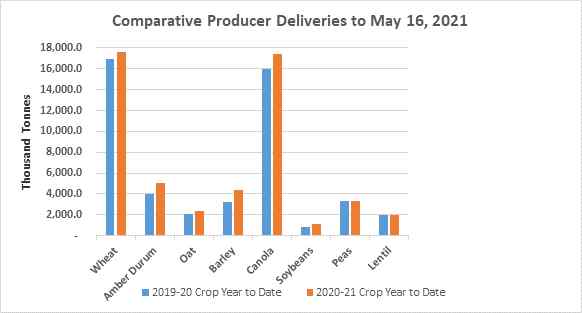
Crop year to date, non-durum wheat deliveries are up by 641,000 tonnes, or 4%. Canadian durum deliveries are up by over one million tonnes, or 25%. Oat deliveries are up by 242,000 tonnes, or 11%, and barley deliveries are up by 1.1 million tonnes, or 34%. Producer deliveries of canola are up by 1.49 million tonnes, or 9%. Pea and lentil deliveries are also higher than year ago numbers.
Image 1. Comparative producer deliveries to May 16, 2021
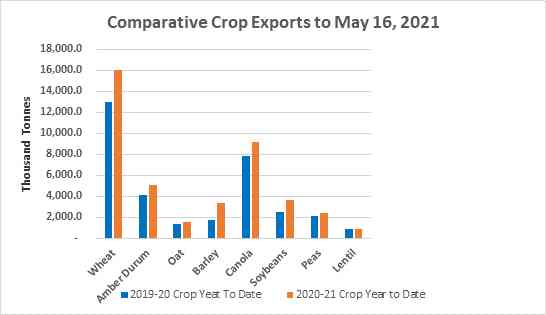
Exports of Canadian crops are equal to or higher than year ago for all crops. Canadian non-durum wheat exports are 3 million tonnes higher than year ago to date while durum exports are almost one million tonnes higher. Oat exports are running 10% higher while barley exports are almost double last year’s pace.
Canola exports to mid-May are up by 1.1 million tonnes, or 45%. Although not a large crop in Alberta, Canadian soybean exports are up by 45%. Pea and lentil bulk exports are similar or higher than the year ago pace.
Image 2. Comparative crop market exports to May 16, 2021
Domestic use of wheat, durum and oats are all higher than year ago. Although domestic use of barley appears to be lower from the CGC data, direct barley sales to feedlots are not included, and feeding demand has been strong. Canola crushing volume so far is higher than last year’s record pace.
‘The implications of these numbers are that crop demand has been strong and movement has been excellent,’ says Blue. ‘This demand-driven market has provided a boost to crop income during this crop year. Continuation of the strong prices depends on the outcome of this year’s crops and demand factors as the world deals with the challenges of COVID-19.’
Source : alberta