Farms.com Home   News

Study Shows Weak External Electric Fields May Protect Crops From Infection

Crops

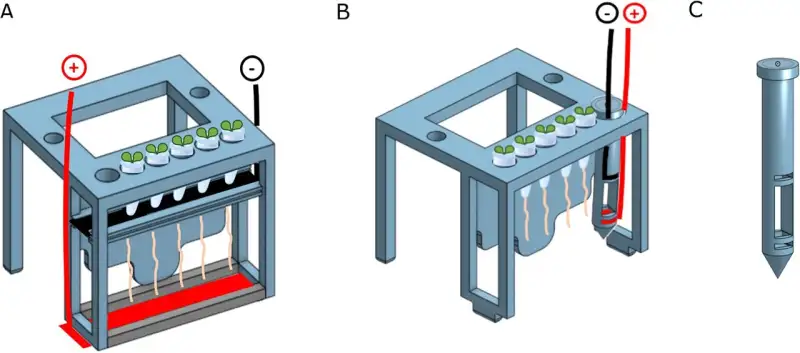
Research from Dr. Giovanni Sena's group in the Department of Life Sciences highlights an intriguing method to help protect plants from pathogen attacks using weak electric fields.

By placing electric fields near , the team showed it is possible to partially shield them from the harmful  of pathogens.

The approach works because certain spores, such as those of Phytophthora palmivora, which attacks  and nuts, are electrotactic—meaning they are naturally drawn to electric charges.

The findings are published in the journal Scientific Reports.

In earlier work, the same group quantified this electrotactic behavior, revealing how P. palmivora spores are attracted to positive electrodes.

Now, the group has shown that placing a device that generates such a field near the roots of plants like Arabidopsis and Medicago can significantly reduce the number of spores that attach to them.

Click here to see more...

Trending Video

$400m loss to save $3.8m? The real cost of closing Canada's research farms | Agri cmte, 10 Feb 2026

Video: $400m loss to save $3.8m? The real cost of closing Canada's research farms | Agri cmte, 10 Feb 2026

Officials are forced to defend cutting a historic $3.8 million research farm while the government simultaneously funded an $8.5 million cricket factory that went bankrupt. Is this evidence of an incoherent spending strategy? Watch the full committee clash to see the government's official rationale.

A heated discussion erupts over the logic behind the government's cuts to AAFC research farms in Lacombe, Indian Head, and Quebec City. MPs question why core, decades-old scientific infrastructure is being deemed 'not core' while other, controversial programs were funded. The Deputy Minister is repeatedly pressed for the actual net savings of the decision versus the expense of relocating research programs.