I have always enjoyed reading tips and tricks in various publications, and I have picked up many useful time- and labor-saving ideas. However, it is not as common to find tips specifically for cattle producers. A few of my favorites are listed below.
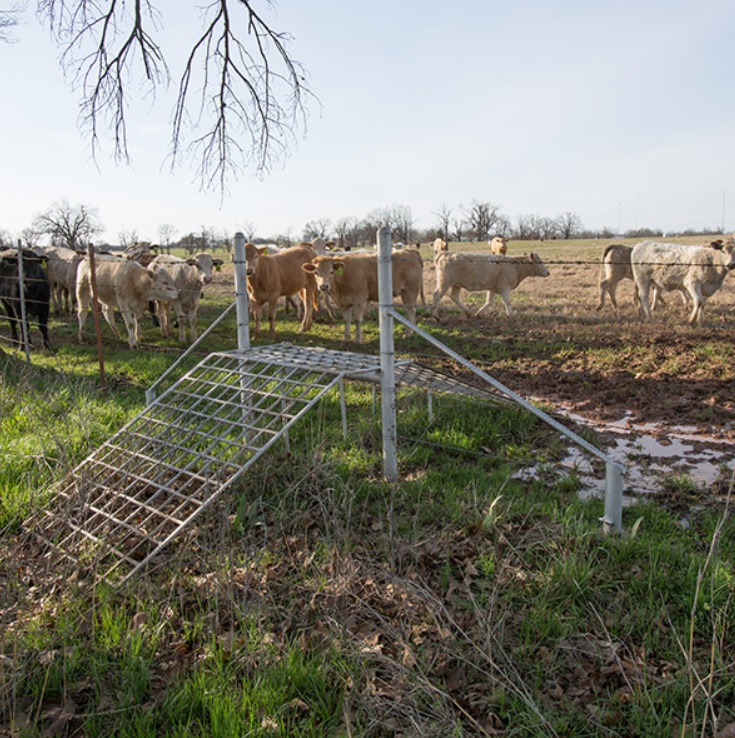 Four-Wheeler Cattle Guard
Most people do not like to open and shut gates. This has led to countless escaped animals, arguments and reprimands. Cattle guards are common along pasture roads that are frequently traveled, but they can be expensive. There are places where it would be handy to cross a fence but a full-size cattle guard is not justifiable. For cattle producers who use a four-wheeler, a smaller version of a cattle guard is a good idea. These only need to support the weight of your four-wheeler, so they can be can be constructed for much less than a full-size version. Elevating the tire path helps prevent cows from jumping across it.
Electric Cattle Guard
If you already have an electric fence nearby, another option is an electric cattle guard. These are inexpensive and easy to build. Devlon Ford wrote a great article in the July 2013 Ag News and Views describing how to build one: Electric cattle guard saves time - click here to read more.
Automatic Gate Opener
Another option is an automatic gate opener. While not cheap, it could pay for itself in time savings when used in high traffic areas. They are very effective when used in conjunction with a cattle guard at main entry points on the ranch. When used alone, they don't work as well in areas where cattle might crowd the gate or near feeding areas. There are many different versions available, and some have an optional electronic lock that can be added. More expensive versions have a camera that alerts your phone with a picture of who is at the gate and the ability to open and close the gate from your phone or at a scheduled time.
Syringe-Holster Cooler
This is an improvement on the "I drilled some holes in a cooler" design. To my knowledge, it was invented by Robert Wells, Ph.D., and works well to keep repeated syringes readily accessible and prevent uncapped needles from puncturing the contents of your cooler. Used properly, it keeps vaccines cool between uses and protects them from sunlight. It also keeps co-workers safe because syringes always go back in their holster instead of lying on a table or tailgate.
Click here to see more...