Farms.com Home   News

US Beef Exports Pick Up The Pace In 2017 Sporting A Strong Competitive Edge Internationally


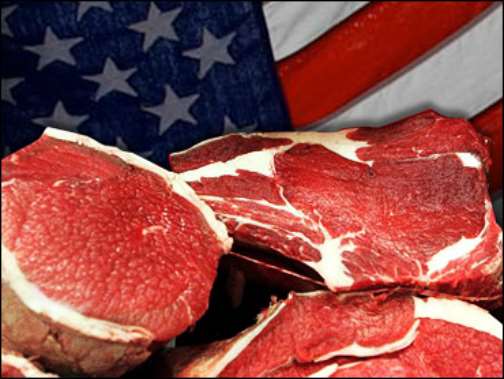
American beef exports plateaued last year in 2016, after the industry experienced several steady years of increase in the foreign marketplace. Here in 2017, it seems the export market is back on track and doing surprisingly well. Jim Robb of the Livestock Marketing Information Center spoke recently with Radio Oklahoma Ag Network Farm Director Ron Hays about the numbers coming in from the first two months of 1Q.

“USDA put out their February numbers which followed the trend of January where we posted strong year-over-year increases in beef exports,” Robb reported, noting that exports by tonnage were up by 20 percent. “The peak of beef exports tends to be in the summer months but we’ve posted strong gains and also our imports fell year-over-year for the first two months of the calendar year by 17 percent.”

This is a significant pivot from what we saw last year, says Robb, adding that the effects of this have spread into the pricing profile - which explains some of the dynamics felt in the markets over the last several months. Contributing to this too are signals in the markets that reflect both international demand and our attractive prices right now.

“The year-over-year gain is mostly in tonnage, so this is a tonnage game,” Robb remarked. “We’ve has a lot of positive developments. We are certainly much more competitive than we were a year ago, competing in markets.”

Click here to see more...

Trending Video

Finding a Balance of Innovation and Regulation - Dr. Peter Facchini

Video: Finding a Balance of Innovation and Regulation - Dr. Peter Facchini

Regulations help markets and industry exist on level playing fields, keeping consumers safe and innovation from going too far. However, incredibly strict regulations can stunt innovation and cause entire industries to wither away. Dr. Peter James Facchini brings his perspective on how existing regulations have slowed the advancement of medical developments within Canada. Given the international concern of opium poppy’s illicit potential, Health Canada must abide by this global policy. But with modern technology pushing the development of many pharmaceuticals to being grown via fermentation, is it time to reconsider the rules?

Dr. Peter James Facchini leads research into the metabolic biochemistry in opium poppy at the University of Calgary. For more than 30 years, his work has contributed to the increased availability of benzylisoquinoline alkaloid biosynthetic genes to assist in the creation of morphine for pharmaceutical use. Dr. Facchini completed his B.Sc. and Ph.D. in Biological Sciences at the University of Toronto before completing Postdoctoral Fellowships in Biochemistry at the University of Kentucky in 1992 & Université de Montréal in 1995.