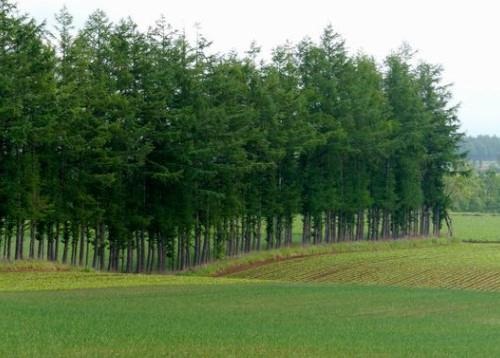
Now through April, USDA NASS will survey Nebraska farmers and ranchers about agroforestry practices they may use on their land, including windbreaks, silvopasture, riparian forest buffers, alley cropping, forest farming and multi-story cropping.
The U.S. Department of Agriculture’s (USDA) National Agricultural Statistics Service (NASS) is conducting the first-ever National Agroforestry Survey. Data collection began Feb. 1 and concludes April 5, 2022. NASS will mail the survey to approximately 200 farmers and ranchers in Nebraska to gather information on the five agroforestry practices used for climate, conservation and production benefits, including windbreaks, silvopasture, riparian forest buffers, alley cropping as well as forest farming and multi-story cropping.
“In this first-ever survey, ag producers have the opportunity to share the different ways they manage valuable agroforestry resources,” said Northern Plains Director Nicholas Streff. “The data will inform programs and policy to benefit both the landowners and farmers as well as the environment.”
The survey is conducted cooperatively with the USDA National Agroforestry Center (NAC), which is a partnership between USDA’s Forest Service and Natural Resources Conservation Service. The NAC will release the summarized data in studies, press releases and publications such as highlights. Highlights will give an overview of how agroforestry practices are used in regions across the United States.
“Information shared directly from farmers and ranchers is one of the best ways to learn what works and what doesn’t in agroforestry. We will use the data to discover the most effective, efficient and profitable ways climate-smart agroforestry practices are used, and share what we learn in a series of research reports to benefit U.S. farmers and ranchers,” said NAC Research Program Lead Matthew Smith.
Producers can respond to the survey securely online at agcounts.usda.gov or by mail. The survey will take no longer than 50 minutes to complete if producers have all five agroforestry practices on their operations. Response time will be shorter if there are fewer practices to report. The information provided by farmers and ranchers is protected by federal law (Title V, Subtitle A, Public Law 107-347), which keeps respondent identity, operation, and answers confidential.
Source : unl.edu