Farms.com Home   News

USDA offers free RFID tags

In further support of their effort to transition to 840 radio frequency identification (RFID) tags for official identification for cattle and bison throughout the U.S., the U.S. Department of Agriculture (USDA) is making 840 RFID tags available free to cattlemen and veterinarians. In Ohio, both the Ohio Cattlemen’s Association and the Ohio Department of Agriculture have been approved to distribute these free tags while they last.
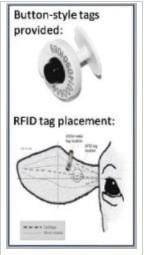
Ohio cattlemen can request the free, white 840 tags.

Ohio cattlemen can request the free, white 840 tags.

The RFID tags are only intended for use in replacement stock. There are both white “840” button tags and orange “840” calfhood vaccination (OCV) button tags available. All RFID tags are low frequency tags. Veterinarians may receive both white and orange tags, while cattle producers may only receive the white 840 tags.

A Premises Identification Number (PIN) is required to order the free RFID tags. To obtain a PIN, scan the QR code found in the fact sheet linked here to access PIN registration on the ODA website, or call them at 614-728-6220.

To request free RFID tags contact Tiffany at the Ohio Cattlemen’s Association office (614-873-6736) or the Ohio Department of Agriculture-Division of Animal Health at 614-728-6220.

Source : osu.edu

Trending Video

Turning Data into Better Decisions: BioCV's Intelligent Monitoring System for Modern Pork Producers

Video: Turning Data into Better Decisions: BioCV's Intelligent Monitoring System for Modern Pork Producers

In this exclusive interview, Jens Kjaer, CEO of BioCV Inc., discusses the North American launch of the BioCV Intelligent Sow Monitoring System and how advanced sensor technology and machine learning are changing the way producers manage sow herds. Using smart ear tags that continuously monitor temperature, behavior, and movement, the system provides real-time alerts for heat detection, farrowing, fever, lameness, and other critical health events—often before they become visible to barn staff.

Kjaer explains how the technology helps producers improve breeding efficiency, reduce non-productive days, identify health challenges earlier, and better support sows during farrowing. He also shares how BioCV's predictive analytics can help operations optimize labor, improve piglet survival, reduce sow losses, and enhance overall productivity in today's increasingly data-driven swine industry.

Learn how this innovative technology is giving producers actionable insights on every sow, every day, helping teams move from reactive management to proactive decision-making while improving both animal welfare and profitability. www.biocv.info/lisa-sow