Farms.com Home   News

Wet Conditions are Hurting South Florida Vegetable Producers

By Pam Knox

A recent article in Vegetable and Specialty Crop News pointed out that recent rain of up to 3 inches in southern Florida have caused the muck soils there to hold water like a sponge. The effects on plants include stand loss and increased diseases on lettuce and beans. Fortunately, the weather for the next week looks pretty dry, which will help fields to lose some water. You can read more at https://vscnews.com/florida-increased-rainfall-producers/.
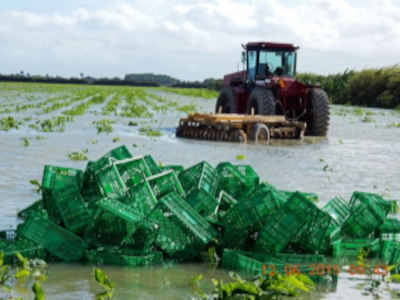
Damaged due to terrential rains in South bFlorida

Torrential rains in south Florida’s Redlands growing region severely damaged winter yellow squash, zucchini and green beans, as well as this field of corn grown by Alger Farms.

Source : uga.edu

Trending Video

Root Exudates, Soil Biology, and How Plants Recruit Microbes | Field Talk Friday

Video: Root Exudates, Soil Biology, and How Plants Recruit Microbes | Field Talk Friday


Field Talk Friday | Dr. John Murphy | Root Exudates, Soil Biology, and How Plants Recruit Microbes

Most of us spend our time managing what we can see above ground—plant height, leaf color, stand counts, and yield potential. But the deeper you dig into agronomy, the more you realize that some of the most important processes driving crop performance are happening just millimeters below the surface.

In this episode of Field Talk Friday, Dr. John Murphy continues the soil biology series by diving into one of the most fascinating topics in modern agronomy: root exudates and the role they play in shaping the microbial world around plant roots.

Roots are not passive structures simply pulling nutrients out of the soil. They are active participants in the underground ecosystem. Plants constantly release compounds into the soil—sugars, amino acids, organic acids, and other molecules—that act as both energy sources and signals for soil microbes.