U.S. wheat growers have a long history of recognizing the value of export market development by supporting the successful public-private partnership with USDA’s Foreign Agricultural Service (FAS). That is why U.S. Wheat Associates (USW) and the National Association of Wheat Growers (NAWG) welcome the introduction of the Cultivating Revitalization by Expanding American Agricultural Trade and Exports (CREAATE) Act of 2022 in the U.S. Senate.
Each year, wheat growers contribute a portion of their wheat sales which qualifies USW to apply for MAP and FMD program funds along with more than 60 other U.S. agricultural export promotion organizations. Unfortunately, inflation, sequestration and administrative costs have sapped the value of the program funds over many years.
“MAP funding has not been increased from $200 million since 2006 and FMD funding has not changed from $34.5 million since 2002, but our foreign competition in most global markets including wheat has grown,” said USW Chairperson Rhonda K. Larson, a wheat grower from East Grand Forks, N.D. “To manage that challenge over the years, USW has closed offices and reduced staff to protect wheat export demand in our top markets. With additional MAP and FMD funds, we could expand our promotion effort to more commercial markets.”
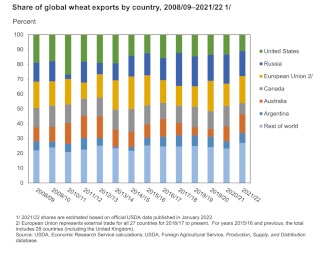
USW also uses MAP and FMD funding to enable greater use of U.S. wheat in food aid programs that have taken on increased significance with the disruption of global wheat trade by the Russian invasion of Ukraine.
“Our food aid programs are the best suited for U.S. wheat to help support the humanitarian needs of those affected by the conflict and for on-going food insecurity,” said Nicole Berg, NAWG President and a wheat grower from Paterson, Wash. “Looking ahead to the 2023 Farm Bill legislation, our food aid programs must receive continued support and MAP and FMD programs dollars must be enhanced to support the effort to promote U.S. wheat and other agricultural products.”
A recent econometric study conducted by agricultural economists at IHS Market and Texas A&M University predicted that doubling funding for these programs would generate an additional $44.4 billion in U.S. agricultural exports over the 2024 to 2029 time period. This would directly benefit farmers, livestock producers, dairy operators and small businesses as they work to maintain and expand their global presence. Read more at www.AgExportsCount.org.
NAWG works with a team of 20 state wheat grower organizations to benefit the wheat industry at the national level. From their offices on Capitol Hill, NAWG’s staff members are in constant contact with state association representatives, NAWG grower leaders, Members of Congress, Congressional staff members, Administration officials and the public.
Click here to see more...