Winter months provide few growing options for gardeners but plenty of opportunities to stay busy, said a Texas A&M AgriLife Extension Service expert.
January is a time to protect existing gardens and prepare for future planting, said Dr. Joe Masabni, AgriLife Extension small-acreage vegetable specialist, Overton.
Masabni said gardeners should remove any weeds that continue to grow throughout the winter months to reduce future weed production.
“Weeds still germinate and grow this time of year so be mindful to rid your garden of them,” he said.
Gardeners with existing plants should also be mindful of possible pests like aphids, Masabni said. They can still emerge during intermittent warm-ups
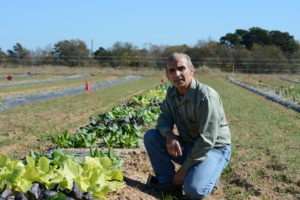
Dr. Joe Masabni, Texas A&M AgriLife Extension Service horticulturist, Overton, kneels in a winter trial garden for Asian vegetables at the AgriLife Research and Extension Center farm in Overton. (Texas A&M AgriLife Extension Service photo by Adam Russell)
Stored vegetables, such as onions or garlic, should be sorted and any spoiled or rotting plant materials should be removed, he said.
January is also a good time to take soil samples and send them off to a lab for testing that can direct a soil improvement regimen for fruits or vegetables, he said.
Gardeners can prepare potting mix to have it ready to start seedlings, he said. Masabni recommends a bag of peat mixed with 1 gallon of perlite and 2 cups of Osmocote, a slow–release fertilizer.
It’s also not too late to plant a cover crop, such as mustard, Austrian winter peas or clover, he said. Plant cover crops close together and cut them multiple times when they reach 6-8 inches tall, and let the cuttings stay on the soil surface. Two weeks before planting a spring garden, incorporate the cover crop into the soil.
“Cover crops can provide up to 60 pounds of nitrogen per acre, so they are a great fertilizer,” he said. “It’s natural and free, except for the seed cost.”
Click here to see more...