Farms.com Home   Ag Industry News

100 hogs destroyed in Missouri

Herd had contracted pseudorabies

By Diego Flammini
Assistant Editor, North American Content
Farms.com

A herd of about 100 hogs was destroyed at a farm in Callaway County, Missouri after some of the animals tested positive for pseudorabies.

According to an email sent by Sarah Alsager, the public information officer for the Missouri Department of Agriculture to the Jefferson City News-Tribune, the animals likely contracted the disease from feral hogs.

The email states that feral hogs are routinely tested for pseudorabies and brucellosis, and when a positive result is found, investigations take place in surrounding areas.
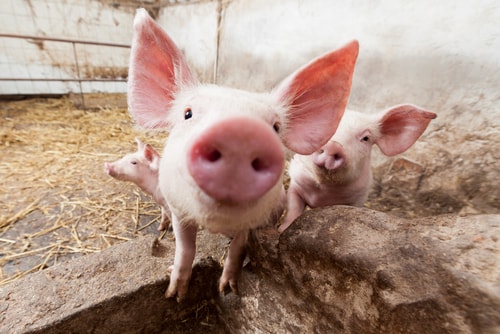
Pigs

"At-risk swine herds are tested and appropriate actions are taken, which may include re-testing a herd (if there are not any indications of disease) or depopulating a herd (if re-testing is not an option or animals are exhibiting clinical signs of disease),” the email said.

Tests concluded the herd needed to be depopulated; the producer will receive payment based on current market price.

Pseudorabies attacks the animal’s central nervous system and symptoms can include convulsions, intense itching, severe rhinitis and is usually fatal.

The disease also has the potential to spread to other livestock. 


Trending Video

Evolution of Beef Cattle Farming

Video: Evolution of Beef Cattle Farming

The Clear Conversations podcast took to the road for a special episode recorded in Nashville during CattleCon, bringing listeners straight into the heart of the cattle industry. Host Tracy Sellers welcomed rancher Steve Wooten of Beatty Canyon Ranch in Colorado for a wide-ranging discussion that blended family history and sustainability, particularly as it relates to the future of beef production.

Sustainability emerged as a central theme of the conversation, a word that Wooten acknowledges can mean very different things depending on who you ask. For him, sustainability starts with the soil. Healthy soil produces healthy grass, which supports efficient cattle capable of producing year after year with minimal external inputs. It’s an approach that equally considers vegetation, animal efficiency, and long-term profitability.

That philosophy aligned naturally with Wooten’s involvement in the U.S. Roundtable for Sustainable Beef, where he served as a representative for the Colorado Cattlemen’s Association. The roundtable brings together the entire beef supply chain—from producers to retailers—along with universities, NGOs, and allied industries. Its goal is not regulation, Wooten emphasized, but collaboration, shared learning, and continuous improvement.