Farms.com Home   Ag Industry News

3 Questions for Landoll’s Jamie Meier

Farm Show Snapshot

By Farms.com Media Team

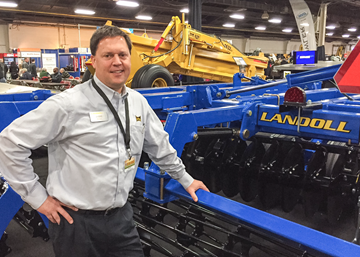
Farms.com caught up with Jamie Meier at the National Farm Machinery Show in Louisville, Kentucky for an update on Landoll Corporation. Meier is the Ag Division sales manager for the company, based in Marysville, Kansas.
Farms.com: Why is Landoll here at the Show?

Meier: “The National Farm Machinery Show gives us a great opportunity to connect with our customers. It allows us to get to learn the issues important to farmers so that we can bring products to them. It’s an important part of product development for us.”

Farms.com: How is business?

Meier: “Business is OK for us. At Landoll we are diversified, so that is important. With trailers and on the material-handling side, business is good. On the ag side, it’s a challenging environment. But it’s one we do pretty well in.”

Farms.com: When you’re not at farm shows, how are you connecting with your customers?

Meier: “Well, we try to stay connected in a number of different ways. The thing we are really trying to stay focused on is being out on the farm. Our territory managers are on top of that. We do attend trade shows. And we use digital media. It all helps us stay in touch with the farmer.”


Trending Video

Evolution of Beef Cattle Farming

Video: Evolution of Beef Cattle Farming

The Clear Conversations podcast took to the road for a special episode recorded in Nashville during CattleCon, bringing listeners straight into the heart of the cattle industry. Host Tracy Sellers welcomed rancher Steve Wooten of Beatty Canyon Ranch in Colorado for a wide-ranging discussion that blended family history and sustainability, particularly as it relates to the future of beef production.

Sustainability emerged as a central theme of the conversation, a word that Wooten acknowledges can mean very different things depending on who you ask. For him, sustainability starts with the soil. Healthy soil produces healthy grass, which supports efficient cattle capable of producing year after year with minimal external inputs. It’s an approach that equally considers vegetation, animal efficiency, and long-term profitability.

That philosophy aligned naturally with Wooten’s involvement in the U.S. Roundtable for Sustainable Beef, where he served as a representative for the Colorado Cattlemen’s Association. The roundtable brings together the entire beef supply chain—from producers to retailers—along with universities, NGOs, and allied industries. Its goal is not regulation, Wooten emphasized, but collaboration, shared learning, and continuous improvement.