Farm Show Snapshot
By Farms.com Media Team
The booth was busy all week, but Dave Staack, vice-president of Ag Sales at Ag Spray Equipment, took time to offer a quick business update to Farms.com at the National Farm Machinery Show in Louisville, Kentucky.
“It’s a buyer’s market right now,” Staack reported. “Until commodity prices do something, that will continue. Farmers are cautious at this year’s show, and they are taking their time.”
Staack, based in Hopkinsville, Kentucky, reported a lot of interest in the new track option for Ag Spray’s LA9000 liquid applicator.
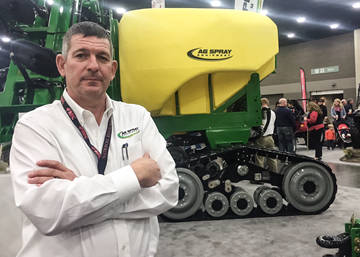
“Tracks have become more popular as farmers continue to address soil compaction.
Equipment is getting larger. Compaction is a reality. And farmers are dealing with it, because it does affect their yield at the end of the year.”
Staack stood in front of a unit with a 55-foot toolbar, with 24-row, 30-inch spacing, and observed that “it used to be that a 1,000-gallon unit was large. But now we are pushing 2,000 gallons.
“There is a lot of added weight out in the fields now.”
Tires are still popular, representing about 65 per cent of sales, according to Staack.
“But as units continue to get bigger, that 65-35 ratio will shift the other way.”