Farms.com Home   Ag Industry News

Precision ag calls for internet improvements on Ontario farms: OFA

Third annual Precision Ag Conference kicks off

By Joe Dales, Vice-President, Farms.com

As the third annual Precision Agriculture Conference opened today, Peter Sykanda was busy assessing some of the newest advances in farm technology.

And how it all relates to broadband.

As the farm policy researcher with the Ontario Federation of Agriculture explained, “our interest in precision agriculture is tied to our interest in broadband internet service across rural Ontario.”

Sykanda was attending the conference along with OFA president Don McCabe.
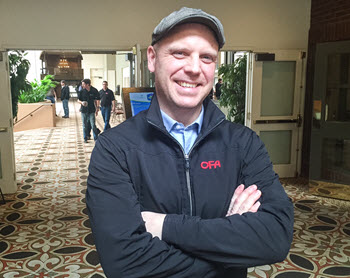
Peter Sykanda

He said the OFA was very aware of the increasing needs of farm businesses across the province, “and what we want to achieve is the fastest, least-expensive, and most-reliable broadband service available, for all our members.

“The new technologies coming on line are only going to increase the need for fastest data transfer.”

So where is the OFA focusing its efforts on behalf of the commercial farmers of Ontario? Government or private industry?

“It’s an interesting partnership between public and private investment, and there are a number of models that can work.

“But looking around at all these new technologies, and the rapid advances in precision agriculture, we are working hard on broadband, and we are confident that we will get there.”


Trending Video

Dicamba Returns for Georgia Farmers: What the New EPA Ruling Means for Cotton Growers

Video: Dicamba Returns for Georgia Farmers: What the New EPA Ruling Means for Cotton Growers

After being unavailable in 2024 due to registration issues, dicamba products are returning for Georgia farmers this growing season — but under strict new conditions.

In this report from Tifton, Extension Weed Specialist Stanley Culpepper explains the updated EPA ruling, including new application limits, mandatory training requirements, and the need for a restricted use pesticide license. Among the key changes: a cap of two ½-pound applications per year and the required use of an approved volatility reduction agent with every application.

For Georgia cotton producers, the ruling is significant. According to Taylor Sills with the Georgia Cotton Commission, the vast majority of cotton planted in the state carries the dicamba-tolerant trait — meaning farmers had been paying for technology they couldn’t use.

While environmental groups have expressed concerns over spray drift, Georgia growers have reduced off-target pesticide movement by more than 91% over the past decade. Still, this two-year registration period will come with increased scrutiny, making stewardship and compliance more important than ever.