The coldest conditions could arrive during the last week of January, the Farmers’ Almanac says
By Diego Flammini
Staff Writer
Farms.com
A large portion of the United States is in for a bitterly cold winter, the 2020 Farmers’ Almanac predicts.
The forecast for the 2019-20 winter includes frozen and snowy conditions in the Midwest, frigid and snowy conditions in the North Central U.S. and a cold, wintry mix in the northeast.
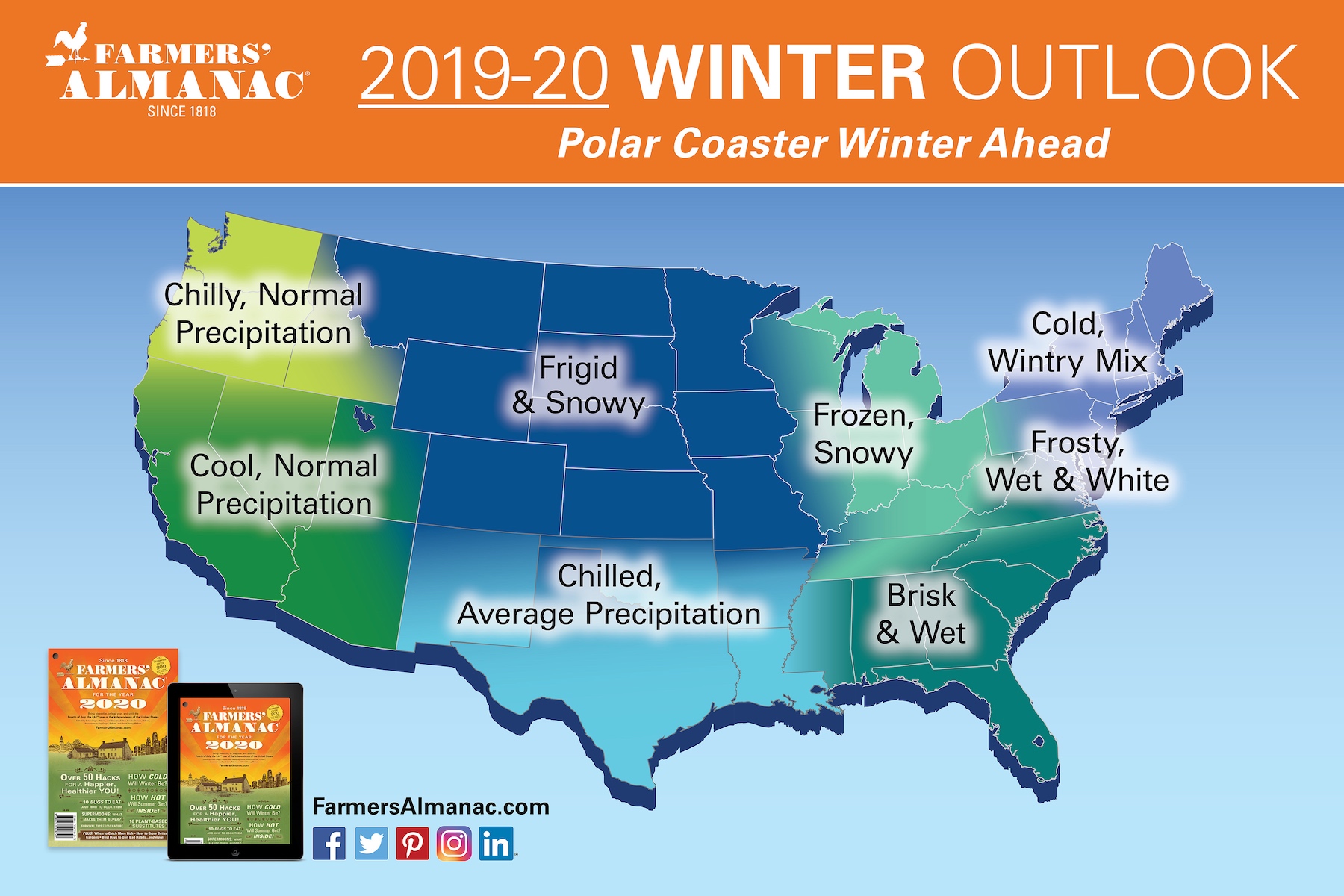
The worst of the winter weather will affect areas east of the Rockies all the way to the Appalachians. And the coldest stretch of weather could span from the last week of January through the first week of February.
Weather conditions may fluctuate, though, reminding some Americans of an amusement park ride.
Winter 2019-20 “will be filled with so many ups and downs on the thermometer, it may remind you of a ‘Polar Coaster,’” the Farmers’ Almanac website says.
Even in the dead of winter, freezing and snowy conditions can affect a farm operation.
The concerns are especially heightened for producers with on-farm storage, said Sarah Hastings, a cash crop grower from Sidney, Ill.
“If you’re storing grain and trying to manage the grain in your bin, the winter weather can affect your drying window,” she told Farms.com. “It could change how much heat or propane or natural gas you have to use to heat the air that you’re putting through your grain bin.”
Snowy weather could also delay grain shipments, she said.
“Ice and snow make everything a little more difficult,” she said. “Your grain loader could be frozen and, depending on how much snow is on the ground, it could delay or slow down semis from being on the road.”
The Farmers’ Almanac provided a glimpse into the spring as well.
“Occasional wet snow and unseasonably chilly conditions will hang on for a ride that you may not be able to get off until April!” the weather forecaster says.