Farms.com Home   News

After Unprecedented Strength, Wholesale Beef Prices Have Reached a Cliff, But is it Time to Panic?

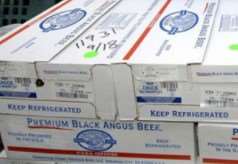
These last few weeks, wholesale boxed beef market prices have begun to slide. Jim Robb, director of the Livestock Marketing Information Center, who works with land grant universities around the country looking at meat demand outlook, told Radio Oklahoma Ag Network Farm Director Ron Hays in a recent conversation, that this past week heading into the Fourth of July, prices went over a cliff.

“We lost $15 per cwt in the boxed beef wholesale market,” Robb reported. “That’s a precipitous decline, obviously. But not completely unusual.”

Recently, this market has been down as much as $20 and some change, Robb says. But he ensures, it is not time to panic. This time last year, it was again down around $16.50 per cwt. Robb makes the case that this level of decline is somewhat normal year to year. His concern is only that it has seemed to have happened so quickly after we have seen markets perform so strongly for so long now this year.

“We had been talking for weeks that the wholes market had not moved down very much and now that has really caught up with the live animal side of the market,” he said. “I don’t think we panic too much about the domestic beef demand component. It’s a concern but most of this story has been here in the short-term supply side.”
 

Click here to see more...

Trending Video

Evolution of Beef Cattle Farming

Video: Evolution of Beef Cattle Farming

The Clear Conversations podcast took to the road for a special episode recorded in Nashville during CattleCon, bringing listeners straight into the heart of the cattle industry. Host Tracy Sellers welcomed rancher Steve Wooten of Beatty Canyon Ranch in Colorado for a wide-ranging discussion that blended family history and sustainability, particularly as it relates to the future of beef production.

Sustainability emerged as a central theme of the conversation, a word that Wooten acknowledges can mean very different things depending on who you ask. For him, sustainability starts with the soil. Healthy soil produces healthy grass, which supports efficient cattle capable of producing year after year with minimal external inputs. It’s an approach that equally considers vegetation, animal efficiency, and long-term profitability.

That philosophy aligned naturally with Wooten’s involvement in the U.S. Roundtable for Sustainable Beef, where he served as a representative for the Colorado Cattlemen’s Association. The roundtable brings together the entire beef supply chain—from producers to retailers—along with universities, NGOs, and allied industries. Its goal is not regulation, Wooten emphasized, but collaboration, shared learning, and continuous improvement.