Farms.com Home   News

California’s Idle Crop Land May Double as Water Crisis Deepens

By Pam Knox

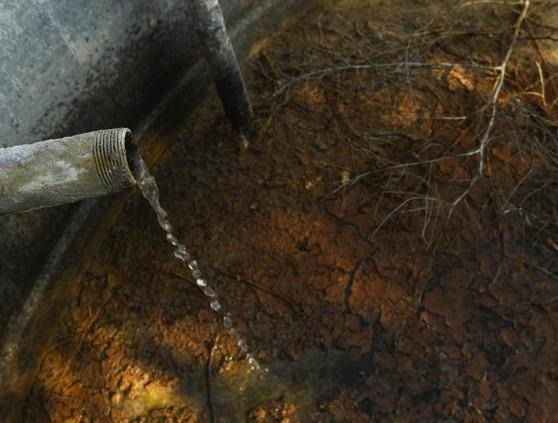
As you probably know, the multi-year drought in the Southwestern U. S. has had profound negative consequences for farmers there. The folks who control water supplies are making cuts to irrigation water that are decreasing or stopping water deliveries to some farmers, leaving them with no irrigation for their crops. The scarce water has to be divided between urban water users, farmers, industrial users, and ecosystem protection, and there is not enough for any of them. How would you handle it if your irrigation water was cut in half or stopped? It is a tough question that does not seem very germane in the last few years of relatively abundant water in the Southeast compared to the longer drought years that occurred in 1998-2002, 2007-2009, and 2011-2013. Bloomberg posted this story about the dire choices farmers are having to make with no access to water to farm.
californias

Source : uga.edu

Trending Video

Intrauterine Vaccines in Swine - Dr. Heather Wilson

Video: Intrauterine Vaccines in Swine - Dr. Heather Wilson


In this episode of The Swine it Podcast Show Canada, Dr. Heather Wilson from VIDO at the University of Saskatchewan explains how intrauterine vaccination is being developed as a new option for swine health. She shares how formulation, adjuvants, and delivery methods influence immune responses and what early trials reveal about safety and reproductive performance. Listen now on all major platforms.

"The idea was that an intrauterine vaccine might avoid a tolerance response and instead create an active immune response."

Meet the guest: Dr. Heather Wilson / heather-wilson-a8043641 is a Senior Scientist and Program Manager at the Vaccine and Infectious Disease Organization at the University of Saskatchewan. Her work centers on vaccine formulation and delivery in pigs, including the development of intrauterine vaccination to support reproductive health and passive protection of piglets. Her background spans biochemistry, immunology, and functional pathogenomics.