Farms.com Home   News

Corn Earworm Management in Sweet Corn Survey

By Shelby Fleischer

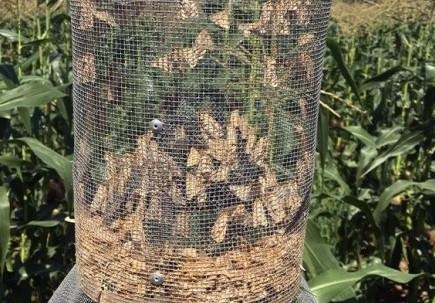
Corn earworm adults in trap

Corn earworm adults in trap.

Dr. Kelly Hamby, an associate professor and Extension specialist with the Department of Entomology at the University of Maryland, is leading a team of researchers who have developed a survey to prioritize research and extension efforts for improving corn earworm management in sweet corn throughout the Northeast. Your participation in this survey would be appreciated and the results will be used to develop a grant proposal to pursue federal funding to address these needs.

The survey should only take 15-20 minutes or less to complete. It is open to sweet corn producers, crop consultants, Extension personnel, and others who make sweet corn pest management decisions or provide management recommendations. 

Source : psu.edu

Trending Video

Root Exudates, Soil Biology, and How Plants Recruit Microbes | Field Talk Friday

Video: Root Exudates, Soil Biology, and How Plants Recruit Microbes | Field Talk Friday


Field Talk Friday | Dr. John Murphy | Root Exudates, Soil Biology, and How Plants Recruit Microbes

Most of us spend our time managing what we can see above ground—plant height, leaf color, stand counts, and yield potential. But the deeper you dig into agronomy, the more you realize that some of the most important processes driving crop performance are happening just millimeters below the surface.

In this episode of Field Talk Friday, Dr. John Murphy continues the soil biology series by diving into one of the most fascinating topics in modern agronomy: root exudates and the role they play in shaping the microbial world around plant roots.

Roots are not passive structures simply pulling nutrients out of the soil. They are active participants in the underground ecosystem. Plants constantly release compounds into the soil—sugars, amino acids, organic acids, and other molecules—that act as both energy sources and signals for soil microbes.