In the last several years technology has become essential to everyday life. The dairy industry, however, has been using technology to improve animal care for as long as I can remember. As a kid, I always joked with my parents that our cows would get cable TV before we did because we were always investing in new technology to improve the lives of our cows while we watched the same three channels even though the rest of the world had moved on to flat screen TV’s and Netflix (true story!). Looking back, this was because by taking care of our cows, our cows took care of us.
Dairy farmers use technology to keep their cows comfortable while also making their farms more efficient. Technology allows us to care for cows in new and exciting ways. From back-scratchers to fitbits, technology improves animal care on dairy farms!
FITBIT FOR COWS
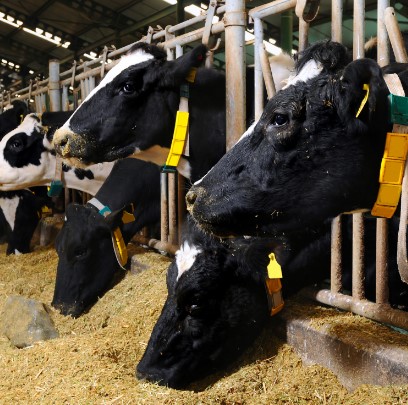
Dairy farmers often use fitbit-like technology to monitor the health of each cow. Cows can wear these monitors around their neck, or on their ankles.
The monitors deliver information like what I get every day from my fitbit, and more. They not only monitor resting and current heart rate, steps taken, miles walked and hours slept, but how many times a cow swallows and a slew of other information that I can use to measure physical fitness and health.
Farmers use this technology to gauge the health of their animals. Farmers can tell when cows are sick before they show any clinical signs of illness, when cows are in heat and need to be bred and when cows are experiencing stress and need additional attention.
SENSORS
Sensors monitor the cows’ environment. Cows are milked with a machine that gently massages milk out of the udder, and sensors can be placed in those machines to detect any malfunction before the equipment actually begins to fail. Keeping this equipment running smoothly prevents it from harming the cows during the milking process.
Curtains cover the walls of many barns so heat can be retained. Many dairy farms use sensor technology to move the curtains up and down according to the temperature outside. This keeps the airflow and temperature inside perfect for the cows. Cow cooling techniques like fans and sprinklers also use sensor technology.
FANS, SPRINKLERS AND COW COOLING GALORE
Cows have a higher internal body temperature than humans at about 101.5 degrees Fahrenheit. Because of their warm bodies, cows prefer weather between 40 and 60 degrees Fahrenheit. So, what do farmers do to keep their cows comfortable in the hot summer months?