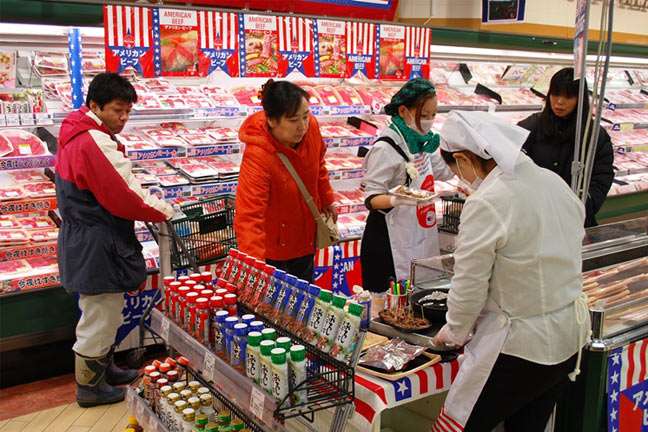
As it works to recover from devastating droughts a few years back, major US competitor in the Asia-Pacific Rim, Australia, is currently in a position that could present American producers the opportunity to capture more of the Aussie’s global market share.
USMEF economist Erin Borror told Radio Oklahoma Ag Network Farm Director Ron Hays that, “As we look forward, we know Australia is in rebuilding mode now, so their production will drop again this year probably by 4 or 5 percent. But, next year, they’ll start to slowly increase.”
Attempting to get our foot in the door to Asian markets, specifically Korea and Japan, Borror is working with those countries to explain the situation and help them understand that Australia will not fully recover to the levels of production during those drought years when there was no feed and cattle were being shipped out by the droves. This leaves the US looking more attractive as a trade partner.
However, Australia’s tariff advantage over the US complicates matters, but the Borror says the US has been able to supply certain products that our competitors down under can’t.
“On the whole, we’re going to continue in this very positive position,” Borror said. “What’s really exciting is that we’re also shipping more chuck, shoulder and round items. We just had the data for January/February come in and the tonnage on those end cuts have doubled.
Click here to see more...