By Stephen Wegulo
Wheat is heading, headed, or flowering in most fields in eastern Nebraska. The Fusarium Head Blight Prediction Center is currently showing a low risk for scab in Nebraska. However, due to the recent rains, there is a possibility that some level of scab may occur in some fields, and the risk will be higher in areas that receive rainfall in the next 10 days. Base the decision to apply a fungicide to suppress scab on the risk level, the cost of application, and the price of wheat.
If a flag leaf application has not been made due to low levels of foliar diseases, it is best to wait until early flowering to apply a fungicide that will suppress scab and control foliar diseases. The fungicides recommended for scab suppression are Prosaro and Caramba. These fungicides also have very good to excellent efficacy on foliar diseases. Do not apply a strobilurin fungicide or a fungicide with a strobilurin as one of the ingredients for suppression of scab. Strobilurin fungicides have been shown to increase vomitoxin accumulation in grain when applied at heading in scab-favorable growing seasons.
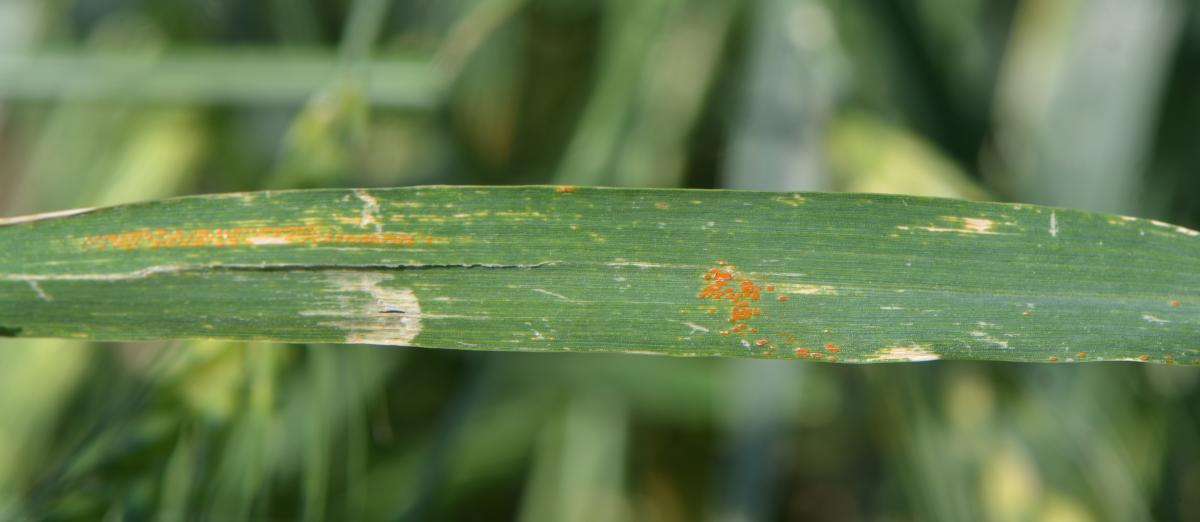
On May 12, leaf rust was confirmed at Havelock Farm in Lincoln (Figure 1). Its development and spread will depend on the weather. It is favored by warm temperatures and wet weather. There is still a moderate to high risk for the development and spread of stripe rust, especially in the western half of the state. Continue monitoring your fields and be prepared to apply a fungicide to protect the flag leaf.
Source:unl.edu